


DALTON, Ga. (June 4, 2026) – At 46 years old, Jathan Reeves looked and felt perfectly healthy, but one morning last November, he couldn’t read the words on his computer. He called his wife from his workplace in Dalton to tell her. When she answered, he was physically unable to form the words.
One hour later, he was receiving a “clot buster” injection at Hamilton Medical Center after his care team determined he had suffered a stroke. The injection worked, but Reeves showed such severe impairment that by day two of his hospital stay, his medical team had already begun preparing his wife, Hannah Beth, to place him in a long-term care facility.
Inexplicably, he woke up at 4:30 a.m. the next day showing radical improvements. Reeves was released within days, underwent several months of physical and speech therapy, and is now almost entirely back to normal.
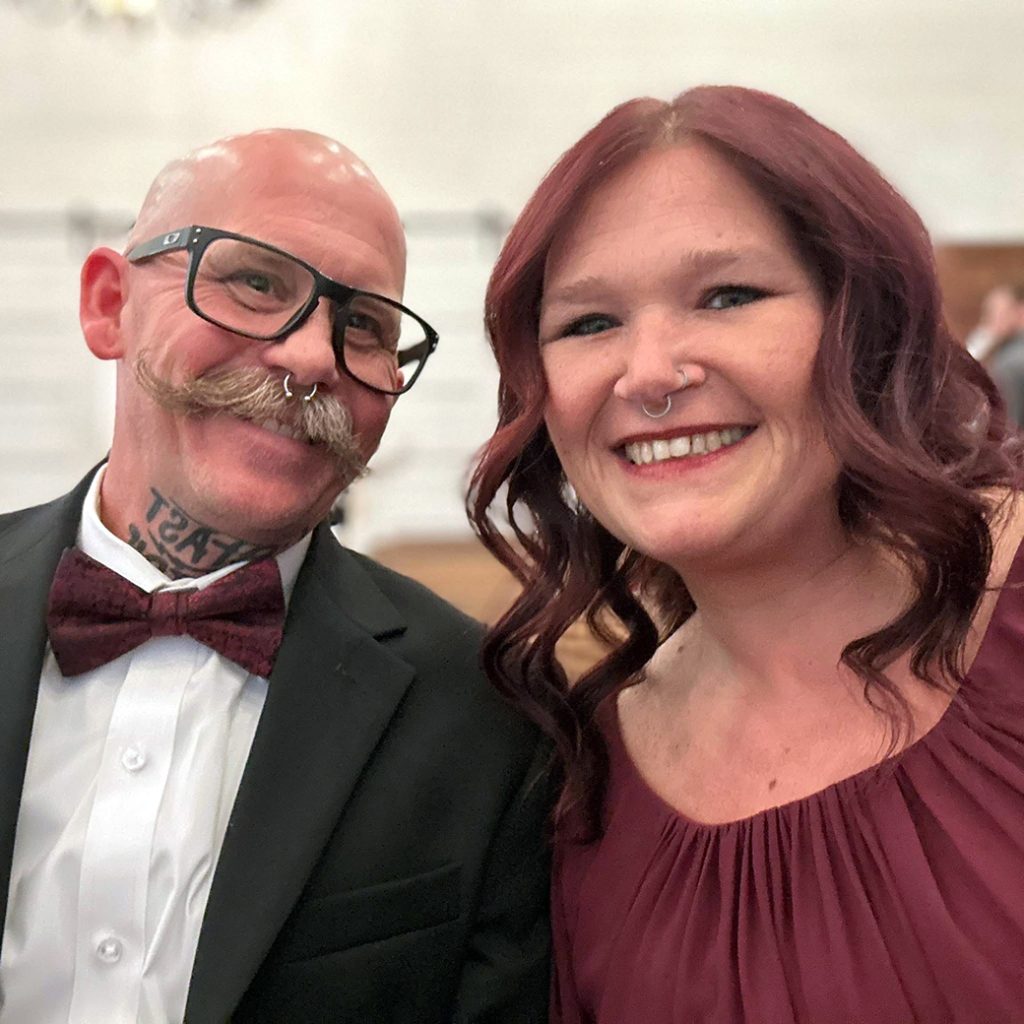
The Chickamauga resident said he’s been called “a walking miracle.” He and his wife are now on a mission to spread awareness that strokes don’t happen only to people who are older or appear unhealthy.
“If you see me, I look like I’m in perfect health,” Mr. Reeves said. “It was because of undiagnosed high blood pressure. This is no joke. It doesn’t matter how old you are or what kind of shape you’re in.”
Mr. Reeves remembers only fragments of his hospital stay, but Mrs. Reeves said the professionalism and compassion his medical team showed went beyond anything they expected. From the nurse who brought warm blankets to both of them, to the speech pathologist who took time to explain his case in detail, to the hospital doctor who personally answered post-discharge concerns – the treatment at Hamilton was something that will stick with her for a long time, she said.
“Everyone there went above and beyond,” Mrs. Reeves said. “We’re so thankful because I’m not sure he would have gotten the same care at another hospital.”
Julia Burris, stroke coordinator at Hamilton Medical Center, said the fact that Reeves sought care quickly and received timely treatment gave him the best possible chance for recovery.
“Time is brain,” Burris said. “It is very important for patients to seek medical treatment as soon as symptoms are present. Early recognition and treatment can be the difference between recovery and lifelong disability.”
Burris encourages remembering the acronym BE FAST to spot and address signs of stroke. The letters stand for balance (dizziness/unsteady gait), eyes (blurred or double vision), face (facial drooping), arm (weakness or numbness), speech (slurred speech or difficulty speaking) and time.
“What makes stroke care at our facility stand out is our coordinated, team-based approach and our focus on rapid, high-quality treatment,” Burris said. “From the moment a patient arrives, or even before arrival through EMS activation, our stroke team works seamlessly to deliver timely, evidence-based care. We prioritize rapid assessment, advanced treatment options, and continuous monitoring to give each patient the best possible outcome.”