


Peeples Cancer Institute (PCI) at Hamilton Medical Center has expanded access to advanced cancer treatments through a partnership with Winship Cancer Institute at Emory University.
The effort brings the latest in cancer research to patients in north Georgia and the surrounding area by opening National Cancer Institute (NCI) supported phase three clinical trials at PCI.
The latest trial to open at PCI evaluates the addition of high-dose targeted radiation to the usual treatment for locally advanced, inoperable, non-small cell lung cancer.

“Clinical trials are an opportunity to advance science and provide new and better ways to treat patients,” said Jayme Carrico, PCI executive director. “They offer hope beyond what might be possible with only standard of care.”
Because this trial is an approved Stage 3 clinical trial, insurance typically covers it, offering patients greater access to these breakthrough treatments.
Clinical trials are categorized into three phases: the first and second phases scope out the safety and side effects of new treatments and are performed at one or two sites with a relatively small number of participants. If the new treatment is shown to be promising in phase one and phase two trials — from both an effectiveness and safety standpoint — it is expanded into a phase three trial. Phase three trials pull in multiple sites, highly trained providers and potentially thousands of patients across the nation or globe. They are typically offered only at larger universities and hospitals.
PCI is opening phase three trials only. Through highly regulated protocols, patients who meet the specific qualifications of each trial are allowed to enroll. Phase three trials further explore the effectiveness of emerging treatments, enabling patients to access what Carrico describes as “the absolute forefront of technology for treating cancer.” Usually, those patients may also receive the proven standard of care treatment.
Cancer treatments are continuously evolving. Becoming a designated site for NCI supported phase three clinical trials is typically reserved for larger universities and hospitals, but it is important to stay up to date and offer the best in care, according to Carrico. It also speaks to PCI’s level of commitment.
“The way an oncologist would treat lung cancer six months ago is different from the way they would treat it today,” Carrico said. “The field is evolving — and not just in chemotherapy drug regimens but genetic and genomic testing and immunotherapy regimens.”
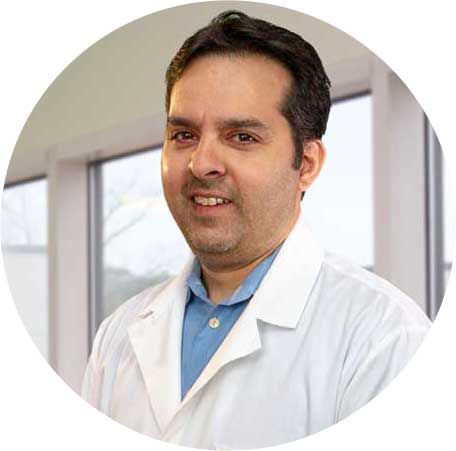
Each trial is strictly monitored, not only by local staff but also by Winship and the clinical trial’s national leadership team. Arif Ali, M, PCI medical director, completed additional training to administer the trials. Strict criteria and quality assurance measures ensure the program meets NCI clinical trial standards.
In many cases, clinical trial sites can be difficult to reach. The closest site to access this trial is Emory in Atlanta, making PCI’s location a valuable resource for local patients in the region.
Ali was previously on the faculty at Emory, where he was the site principal investigator for multiple research trials and grants. He said he is excited to offer the lung cancer trial to patients, but he also expects to soon open clinical trials for breast, prostate, brain, rectal, gynecologic, and head and neck cancers.
“This is a key differentiator between us and surrounding hospitals,” Ali said. “We are excited to be able to offer these treatment options not only for patients in Whitfield County but the surrounding region.”