


DALTON, Ga. (February 24, 2026) – Linda Jackson, 83, is spending National Heart Health Awareness Month thankful to be alive.
Arterial blockages like the ones she experienced late last year are common in cardiac care. What made her case extraordinary, however, was the challenging location and the highly specialized procedures required to clear them.
“I wouldn’t be here today if I hadn’t gone to these doctors,” said Jackson, a Dalton resident.
When Jackson’s ankles began swelling abnormally, she told her primary care physician who sent her to Vitruvian Health – Heart & Vascular at Hamilton. There, she saw Vineet Dua, MD, a non-invasive cardiologist. Jackson had difficulty breathing when exerting herself, which led to a diagnosis of congestive heart failure. Dua ordered an echocardiogram and a cardiac CT. The echocardiogram showed normal heart function, but the cardiac CT showed significant heart blockages.
Dua referred Jackson to David Fishman, MD, an interventional cardiologist who performs interventional cardiac procedures. Fishman performed a heart catheterization procedure at Hamilton Medical Center that confirmed she had multiple arterial blockages, and at least one of them was located at a place in her heart that greatly increases risk of negative outcomes.
Nationwide, it is common for patients to have more than one surgery when multiple arteries are involved. The staged approach (more than one surgical procedure) has benefits that are best for certain patients. In Jackson’s case, Fishman and the cardiac team felt that a procedure requiring more skill but a shorter path to recovery was the best option.
With one artery being used with medical equipment for a procedure and the others compromised by blockages, the blood flow to Jackson’s heart would be cut off. To keep blood flowing during the procedure, the team connected a mechanical device on the outside of her body to pump blood while the heart’s normal channels were being repaired.
The procedure, performed by Fishman, was an alternative to open heart surgery, and she experienced it with no complications. At the end of the procedure, the device was removed, and her heart resumed its normal work.
Dua said it’s one example of how the Heart & Vascular team exceeds national averages when it comes to best practices for high-risk cardiac interventions.
“We do high-risk interventions for very complicated patients,” he said. “Some hospitals transfer these patients to other facilities for specialized care. Not every interventionist can do these kinds of procedures. You must have training. We’re able to perform them here because Dr. Fishman has a lot of training in high-risk procedures.”
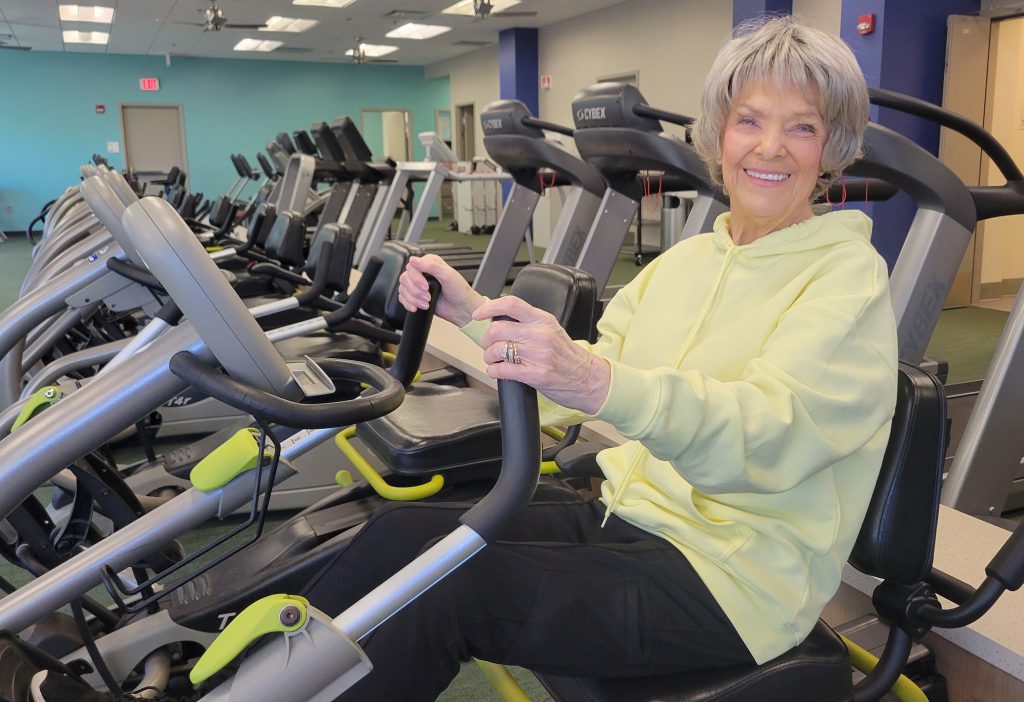
Jackson is undergoing cardiac rehabilitation at Hamilton Medical Center’s Cardiac Rehab program, located inside Bradley Wellness Center. There, specialists guide her through monitored exercise to safely increase her strength and stamina. She credits her recovery both to Fishman’s unique expertise and the all-around care she receives.
“My condition was very rare and very serious,” Jackson said. “God worked this out for me, and all the doctors and nurses have all been wonderful. I need people to know how good our heart unit and our hospital are.”
February is National Heart Health Awareness Month.