


DALTON, Ga. (October 22, 2025) – One month away from her 40th birthday, Cohutta resident Jennifer Collins received some of the most difficult news of her life — she was living with stage 3 breast cancer.
Nearly a year later, she’s completing her final chemotherapy treatments, and her tumor is nearly gone. Collins said she found strength and hope in her faith, her supporters and her care team at Peeples Cancer Institute (PCI) at Hamilton Medical Center.
Collins says the thoughtfulness and care she received from Lisa Duhaime, MD, nurse practitioner Kim Bailey, nurse practitioner Jaime Pesl and a team of caring nurses made all the difference, she said.
“My providers at PCI have been just absolutely amazing,” Collins says. “Any time I’ve been nervous or scared, Dr. Duhaime has reminded me that mine is very curable and to just trust the process.”
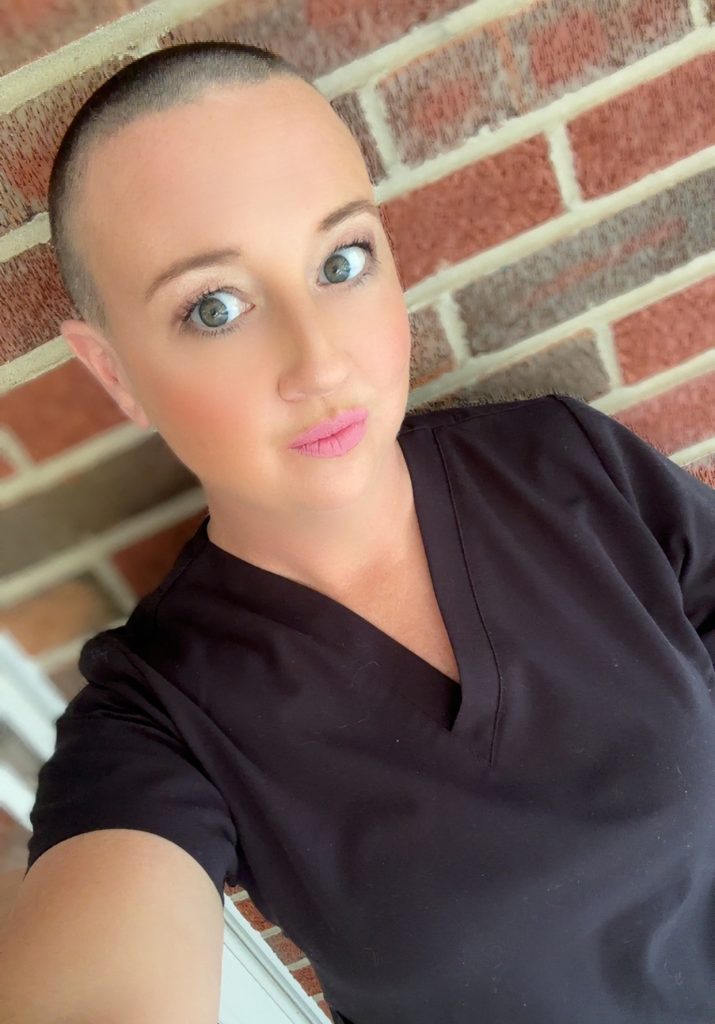
The treatments appear to be working. Her tumor has shrunk from around 6 centimeters to now less than 1 centimeter.
According to the American Cancer Society’s Breast Cancer Facts and Figures 2024-2025, while the number of cases has increased in recent years, “The breast cancer death rate has dropped by 44 percent since 1989 because of advances in treatment and earlier detection.” The bottom line is early detection saves lives.
January was when Collins first noticed a lump on the inside of one breast. Initially, she brushed it off. She’d recently been in a car wreck and thought the lump stemmed from that. But it kept getting bigger.
“And every time I turned on the TV, there was something about breast cancer,” Collins says. “Every store I went into, there was something about breast cancer. Finally, I was like, ‘OK, God, what are you trying to tell me?’”
Breast cancer was not initially on her radar. No one in her family has had it. And she was in good health.
“I was honestly floored when my doctor called me with the news,” Collins says. “But I’ve kept my faith. God showed me I needed to get checked, and he led me to the providers at Peeples.”
Collins says she feels relieved to be nearing the end of her chemo regimen, but she’s also intent on not letting it happen again. She is scheduled for an elective double mastectomy later this year — a move that goes beyond the recommended lumpectomy to guard against the estrogen-fueled cancer recurring.
“I’m a single mom,” she says. “I am mom and dad, and I have continued to take care of my kids. My little girl just turned six. I’ve managed even through this journey to get her back and forth to school, to take care of my kids, do the laundry, and do everything I needed to do. I have really pushed through to take care of my kids and still fight.”
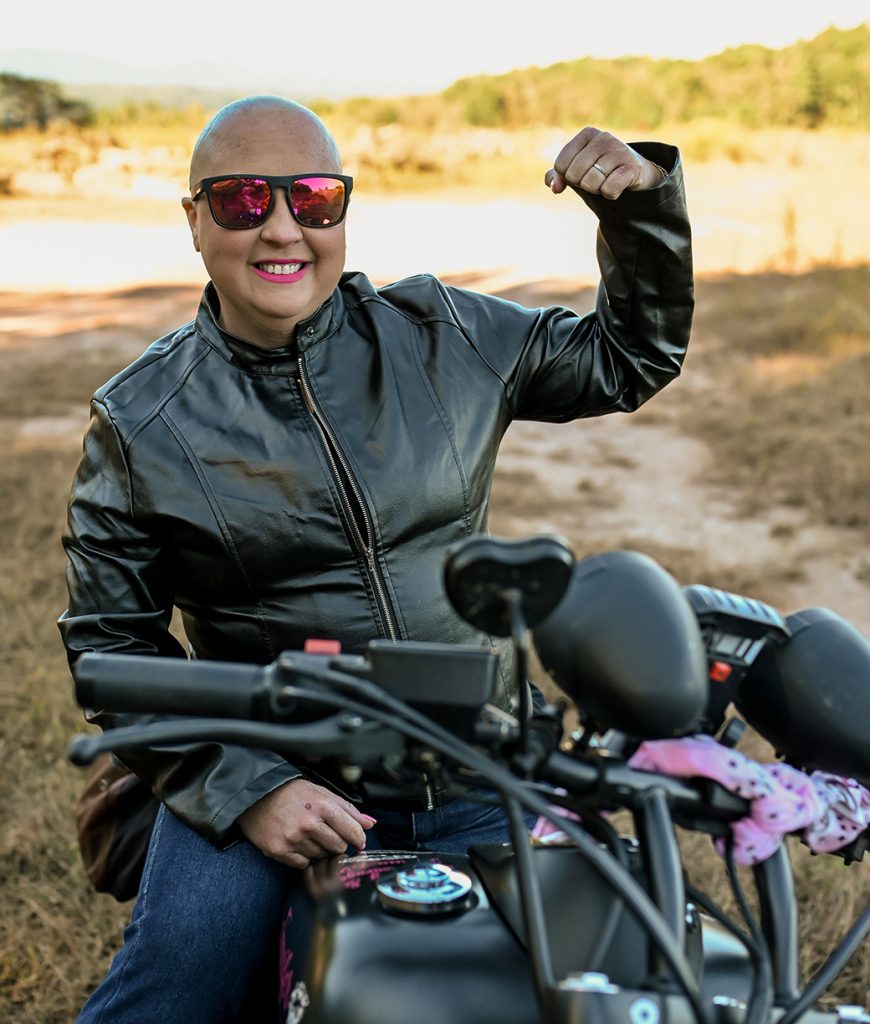
About one in eight women in the United States will be diagnosed with breast cancer in their lifetimes. Collins says her experience drove home how quickly that statistic can become personal.
“It doesn’t discriminate,” Collins said. “But it’s also a sisterhood. It’s amazing the women who will share and support and uplift you and help encourage you to get through it, and I try to do the same for people.”
Collins shared a story about a time a stranger inexplicably drove to her rural home and showed up at her door from an organization offering food boxes. When Collins answered, he pointed to her bare head and asked if she was OK. She explained her cancer.
“He told me that his wife was 37 when she got diagnosed and now she’s 75,” Collins says. “I believe that was God sending me a sign that I’m going to be OK.”