


DALTON, Ga. (February 17, 2026) – A few years ago, Dana Sapp began feeling nauseous when she ate. The discomfort escalated to persistent vomiting, recurrent bronchitis and frequent trips to the doctor for bloodwork and antibiotics.
Sapp’s health care providers offered prescriptions, but after a few years, she began experiencing numbness in her legs. She recalls telling her doctors that she felt like something was not right and that she felt she needed more testing.
According to Lisa Duhaime, MD of Peeples Cancer Institute (PCI) at Hamilton Medical Center, where Sapp is currently being monitored, alerting health care providers early about symptoms is key to catching cancer at its most treatable stages.
Sapp’s request for testing launched a journey that eventually led to a diagnosis of early-stage esophageal cancer and into recovery and ongoing coordinated care at PCI. She feels seen, believed, and guided by providers there who take her seriously.
The process at PCI started with a chest X-ray that showed her lungs were clear but there was a mass present.
Here to teach
She was referred to a gastrointestinal specialist. That doctor looked at the report and asked if she was having trouble swallowing, a question that puzzled Sapp. She told him that she wasn’t but that she vomited every time she ate. Another test revealed she had undigested food in her esophagus, an infection with H. pylori (bacteria often found in the stomach) and cancer of the esophagus.
A few years earlier, one of her aunts had died of esophageal cancer. Sapp’s head spun. When her family researched the cancer and its survival rates, the numbers were stark — a survival rate less than 30 percent. Sapp was determined to fight.
She returned to work and gained support from her coworkers, her husband of 25 years and her mother. “At a new church, a pastor learned of my condition, anointed me with oil, and prayed over me,” she said. Her resolve grew stronger.
In addition to surgery and monitoring, she’s made multiple lifestyle changes, including changes to her diet. She also learned to talk to the cancer, to tell it things like, “I understand you’re here to teach me something.”
“The cancer came when I needed more than just physical healing,” Sapp says. “It helped me focus on my spiritual life, my emotional life, my connection with family members. It brought my whole family together.”
A positive attitude
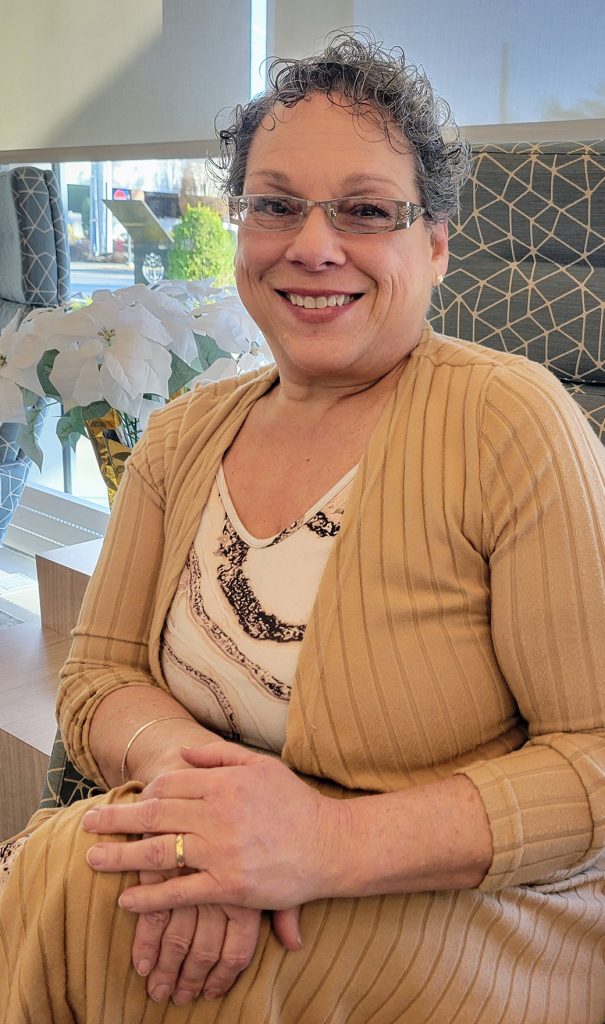
Today, Sapp, 62, says she didn’t just beat a type of cancer that has a low survival rate. She advocated for herself in ways that kept her alive. And she’s now living a life she genuinely loves and feels better than ever. She encourages others to listen to the signals their bodies give them, advocate for themselves, and select providers who listen.
The care she receives at PCI through ongoing scans and monitoring is reflected throughout the organization, she said. Kindness and care are just part of the culture.
Duhaime said Sapp’s mentality played a big role in her recovery.
“A positive attitude is 90 percent of the battle,” Duhaime said. “Patients should pay attention to symptoms and always notify physicians so these symptoms can be evaluated sooner rather than later but still be caught at a curable stage.”